| |
|
| Selected Editorials |
|
 Renewables a safe haven amid energy crises Renewables a safe haven amid energy crises | | Najib Saab
September 2026
The global energy crisis, triggered by the conflicts in Ukraine and the Gulf, is profoundly affecting energy transition plans. | | | Arab Environment Challenges in a Changing World | | Najib Saab
July 2026
The world has faced enormous crises in recent years, from the Corona pandemic to the devastating war in Ukraine, the ethnic genocide in Palestine and the American-Israeli-Iranian damaging confrontation, with its devastating impact on Lebanon and the Arab Gulf countries, to the shocking isolationist unilateral policies of the US administration led by Donald Trump. | | | Coalition of 'climate willing' partners needed | | Najib Saab
November 2025
Climate action is facing unprecedented challenges, due to the rise of populist movements led by the United States administration. | | | Fraud Threatens EU's Green Ambitions | | Najib Saab
August 2025
The embezzlement of hundreds of millions of European agricultural funds in Greece is not an isolated incident, but rather a manifestation of a trend not limited to the EU or Greece in particular. | | | Trump's Lost War on Humanity and the Environment | | Najib Saab
May 2025
The hostile economic war, launched by US President Donald Trump against the entire world under the slogan "America First", has obscured other aggressions, which might be more dangerous. | | | Urban Greening, Water Security and Desert Ecosystem
| | Najib Saab
April 2025
When an advocate of environment and climate action receives an invitation to talk at an international investment conference, it would initially sound like a mistake. | | | Populism Destroys the Earth, Laws Protect it | | Najib Saab
February 2025
The threats to environment and climate policies around the world, posed mainly by the spread of populist movements in Europe and the absurd ideas of President Donald Trump in USA, may slow the pace of action but cannot stop it. | | | Climate Action Stuck Between Survival and Growth | | Najib Saab
January 2025
After thirty years of climate summits, debating the reality of climate change is no longer the priority, as the discussion today has narrowed down to determining who will pay the price for the measures needed to halt it and deal with its detrimental consequences. | | | After 'Arab Spring Floods': Do Not Use Climate Change as Excuse | | Najib Saab
May 2024
Will the spring floods that hit some Arab countries serve as a reminder of the power of nature and the inevitability of respecting its rules? | | | Investing in the Poor | | Najib Saab
April 2024
The $20 billion provided by the US Environmental Protection Agency this month to support the transition to sustainable energy in local communities represents a milestone. | | | Defying Nature Can Buy Time but Does not Save the Environment | | Najib Saab
April 2024
Can technology alone stop the collapse of natural systems, without addressing the root of the problem and changing production and consumption patterns? | | | Energy Transition: Fixing Plan A Should Precede Shifting to Plan B | | Najib Saab
March 2024
Achieving the goal of tripling the production capacity of renewable energy by 2030 will not be possible if the world continues on the current path. | | | Water Label Besides Energy Label | | Najib Saab
March 2024
When shopping for any electrical device, we find a label specifying energy efficiency, usually from best to worse, in classes from A to G. | | | Europe Succumbs to the Farmers' Revolution | | Najib Saab
March 2024
Finally, Europe has succumbed to the farmers' revolution, with the European Parliament elections around the corner. | | | Artificial Intelligence: For Sustainability or Destruction? | | Najib Saab
February 2024
Governments, businesses, industries and financial institutions, as well as universities and research centers that do not keep pace with developments in artificial intelligence (AI) put themselves out of the competition. | | | Environmental Education for a Sustainable Future | | Najib Saab
February 2024
The perception of environment has expanded in recent decades from fighting pollution to the management of natural resources. | | | Misleading Green Labels: From Food and Fashion to Cars | | Najib Saab
January 2024
The phrase "Made from recycled materials" was what first caught my eye, printed on a label attached to a sweater. | | | COP23 Protects Marine Life...Who Protects Human Life? | | Najib Saab
December 2023
There is no typo in the title, as the subject of the article is indeed COP23 and not COP28. | |
|
|
|
|
| Articles |
|
 The environmentalist minister of energy The environmentalist minister of energy | | Najib Saab
22 June 2020
Amid news about the increasing number of coronavirus deaths, confirmed cases, and the fear for new waves of the virus, other positive news has gone unnoticed. This includes news that proves that the will to live and progress is stronger than any pandemic or disaster. Few recent events stood out in this context at the environmental level. | | | Education on environment creates prosperity and stability | | Najib Saab
26/11/2019
When discussing environmental changes and challenges, and their relation to sustainable development, the role of education cannot be underestimated. A report released on 14 November by the Arab Forum for Environment and Development (AFED), tackles this issue and recommends a road map for integrating environment and sustainability into curricula. Entitled Environmental Education for Sustainable Development in the Arab Countries, the report traces signs that many Arab countries have begun to appreciate the key role that the environment should claim in their education systems.
| | | Is renewable energy in Jordan victim of its success? | | Najib Saab
27/3/2019
"A victim of its own success? Jordan re-evaluates its power generation strategy," was the title of an article in The National Law Review, following the Jordanian government's decision to withhold licenses for new renewable energy projects. The sudden move came at a time when the Jordanian renewable energy sector had reached advanced levels and gained global acclaim as a remarkable success story. This resonated a similar decision one year ago, when Jordan revoked the tax incentives extended to encourage electric and hybrid cars, at a time when their share of new imported vehicles surpassed any other country in the world, exceeding 50 percent in 2017. This success in promoting cleaner cars made Jordan a model in the region and inspired similar regulations in other countries. | | | Is renewable energy in Jordan victim of its success? | | Najib Saab
27/3/2019
“A victim of its own success? Jordan re-evaluates its power generation strategy,” was the title of an article in The National Law Review, following the Jordanian government’s decision to withhold licenses for new renewable energy projects. The sudden move came at a time when the Jordanian renewable energy sector had reached advanced levels and gained global acclaim as a remarkable success story. This resonated a similar decision one year ago, when Jordan revoked the tax incentives extended to encourage electric and hybrid cars, at a time when their share of new imported vehicles surpassed any other country in the world, exceeding 50 percent in 2017. This success in promoting cleaner cars made Jordan a model in the region and inspired similar regulations in other countries | | | Who pays the bill at Climate Summit? | | | Second week of negotiations at the Climate Summit in Paris overshadowed by the question of who pays the bill. A draft agreement reached at the first week was put forward to the ministerial segment, with unresolved issues revolving around the distribution of responsibilities. | | 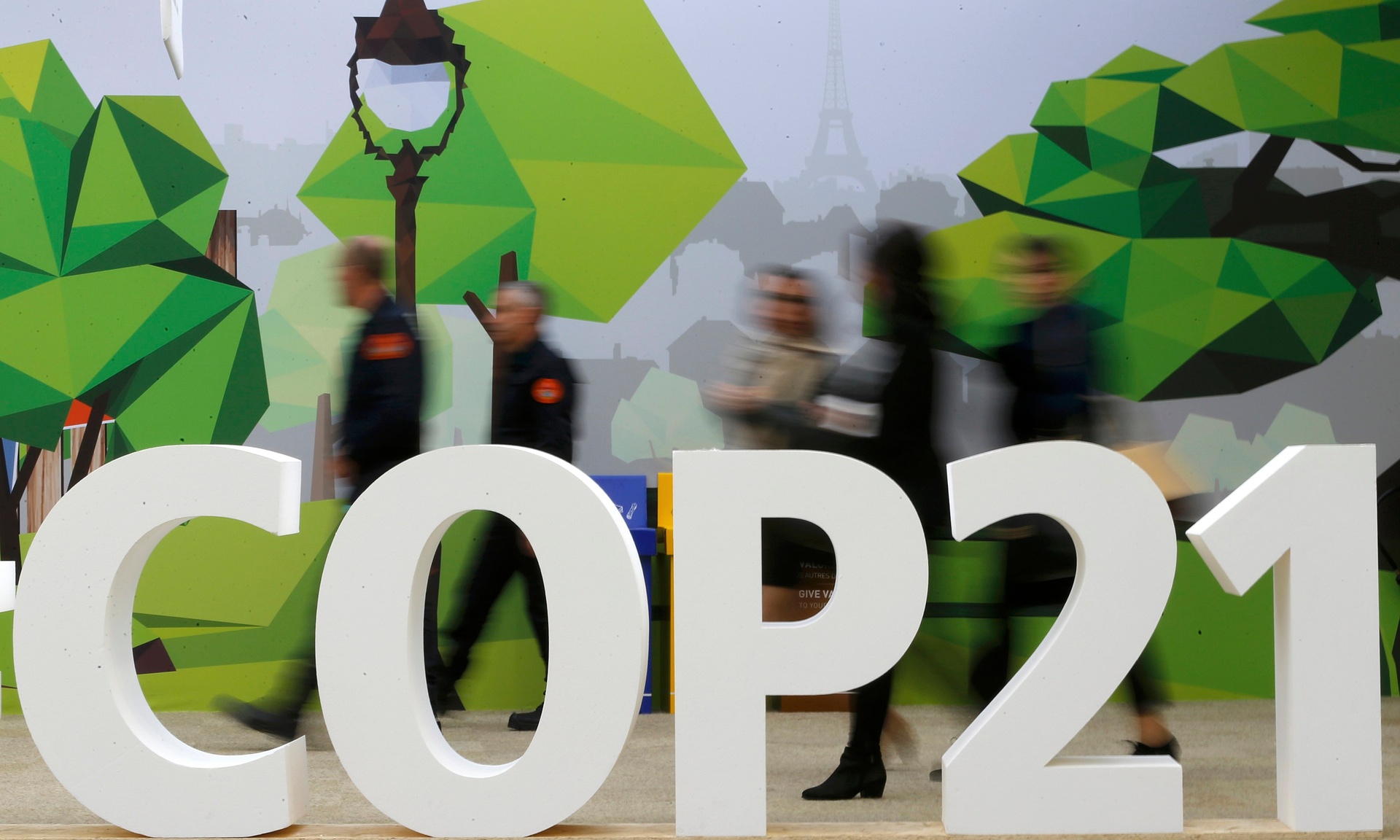 | |
|
|
|
|
|
|
|
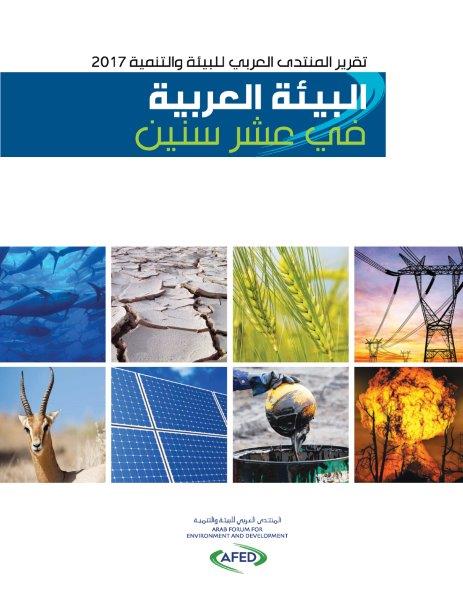 | | | Arab Environment in 10 Years | | | ARAB ENVIRONMENT IN 10 YEARS crowns a decade of the series of annual reports produced by the Arab Forum for Environment and Development (AFED) on the state of Arab environment. It tracks and analyzes changes focusing on policies and governance, including level of response and engagement in international environmental treaties. It also highlights developments in six selected priority areas, namely water, energy, air, food, green economy and environmental scientific research. |
|
 |
|
|
|
|